Pipeline systems are the lifelines of oil & gas, refinery, petrochemical, and industrial fluid transport operations. Over time, internal deposits such as wax, sludge, paraffin, scale, rust, liquid residue, and debris can accumulate inside the line, reducing flow efficiency and creating serious maintenance risks. This is where pipeline cleaning pigs play a critical role.
Pipeline pigging is one of the most effective pipeline cleaning solutions used to maintain throughput, reduce pressure loss, support product quality, and protect long-term pipeline integrity. Whether the requirement is light dewatering, aggressive sludge removal, pre-commissioning cleaning, or routine maintenance, selecting the right pig type directly impacts operational efficiency.
From foam pigs for flexible cleaning to brush pigs for mechanical scrubbing and highly durable PU coated pigs for demanding applications, different pig designs are engineered for different pipeline conditions. For oil and gas engineers, EPC contractors, maintenance teams, and procurement buyers, understanding pipeline cleaning pigs types and their practical applications is essential for selecting the most effective industrial pigging solution.
This guide explains the major pipeline cleaning pigs applications, how each pig type works, and why polyurethane coated pigs are often preferred for repeated heavy-duty cleaning cycles.
Table of Contents
What is a Cleaning Pig for Pipelines?
Pipeline cleaning pigs are mechanical devices inserted into pipelines to clean, inspect, separate products, dewater, dry, or remove internal deposits. These pipeline cleaning tools travel through the line using the system’s flow pressure, compressed air, water, nitrogen, or product movement.
In pigging in oil and gas, the pig moves through the internal diameter of the pipe while maintaining wall contact, helping remove accumulated materials that can obstruct flow.
The main functions of pipeline pigging include:
- Removing wax, sludge, and debris
- Dewatering after hydrotesting
- Drying pipelines before commissioning
- Product batching and separation
- Preparing the line for inspection tools
- Supporting corrosion control
- Improving flow assurance
- Reducing contamination risks
For pipeline operators, pigging is not just cleaning—it is a critical part of pipeline maintenance, operational safety, and lifecycle management.
Why Pipeline Cleaning Is Important
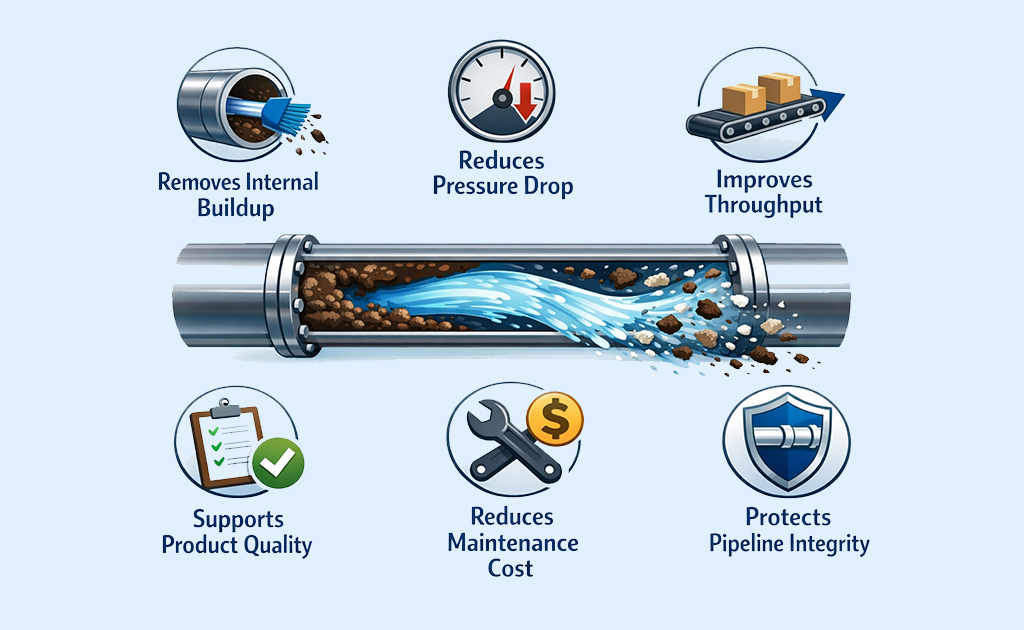
Regular pigging provides both engineering and business benefits across upstream, midstream, downstream, and industrial fluid systems.
1) Removes Internal Buildup
Wax, scale, sludge, and paraffin deposits reduce effective internal diameter. Pigging restores line cleanliness and improves flow conditions.
2) Reduces Pressure Drop
Internal deposits increase friction losses. Proper pipeline cleaning pigs applications help reduce pressure drop and improve pumping efficiency.
3) Improves Throughput
A clean line allows better flow rates, improving operational productivity in crude oil, gas, refined product, and chemical transfer systems.
4) Supports Product Quality
In product transfer pipelines, cleaning pigs help reduce cross-contamination and preserve product consistency.
5) Reduces Maintenance Cost
Preventive pigging avoids unplanned shutdowns, expensive flushing operations, and emergency maintenance events.
6) Protects Pipeline Integrity
Pigging supports internal corrosion management, deposit removal, and inspection readiness, strengthening overall pipeline integrity programs.
Types of Pipeline Cleaning Pigs
Understanding pipeline cleaning pigs types is essential for choosing the right pigging solution.
Foam Pigs
Foam pigs are among the most widely used pipeline cleaning pigs due to their flexibility and versatility. Made from open-cell polyurethane foam, they can easily travel through bends, valves, reducers, and varying pipeline geometries.
They are commonly used for:
- Light debris removal
- Liquid displacement
- Dewatering
- Drying
- Pre-commissioning
- Initial cleaning runs
Their compressibility makes them ideal for delicate or complex pipeline routes.
Bare Foam Pigs
Bare foam pigs are simple foam bodies without external coating or abrasive materials. These are best suited for:
- Light cleaning
- Initial commissioning runs
- Drying
- Gauging
- Removing loose liquid residue
They are cost-effective and commonly used as first-pass cleaning tools.
Low, Medium, and High Density Foam Pigs
Foam density plays a major role in pig performance.
Low Density Foam Pigs
Best for:
- Drying
- Light liquid displacement
- Soft cleaning
- Highly flexible pipeline routes
Medium Density Foam Pigs
Best for:
- General-purpose cleaning
- Moderate debris removal
- Balanced flexibility and durability
High Density Foam Pigs
Best for:
- More demanding cleaning
- Better wall contact
- Tougher deposits
- Longer cleaning runs
This density-based selection is highly important for engineers choosing the right pipeline cleaning solutions.
Brush Pigs
Brush pigs combine foam or solid bodies with external brushes to mechanically scrub the inner pipe wall.
They are ideal for:
- Wax removal
- Soft scale cleaning
- Loose corrosion product removal
- Sludge cleaning
- Routine oil & gas maintenance
Compared to standard foam pigs, brush pigs provide better mechanical cleaning action and are highly effective in pipeline maintenance programs.
PU Coated Pigs
Among all pipeline cleaning pigs types, PU coated pigs are one of the most reliable choices for heavy-duty industrial cleaning.
These pigs use a foam or pig body with a polyurethane coated pigs outer layer that improves:
- Abrasion resistance
- Surface durability
- Wear life
- Cleaning aggressiveness
- Reusability
For harsh oil and gas pipeline conditions, PU coated pigs offer superior performance compared to bare foam alternatives.
Why PU Coated Pigs Perform Better
- Better resistance against rough internal pipe surfaces
- Longer operational life
- Lower replacement frequency
- Stronger cleaning contact
- Improved repeated-use performance
- Excellent for sludge and residue removal
For EPC contractors and industrial procurement teams, polyurethane coated pigs deliver better lifecycle cost value.
Crisscross Coated Foam Pigs
These pigs feature a cross-pattern polyurethane coating that improves both surface grip and durability.
Best suited for:
- Moderate to tough cleaning
- Better wiping action
- Improved wear resistance
- Repeated maintenance pigging
They are preferred when standard foam pigs are insufficient but a rigid pig is unnecessary.
Wire Brush Pasted Foam Pigs
These advanced pigs combine foam flexibility with wire brush action.
Applications include:
- Harder wax deposits
- Stubborn soft scale
- Heavy sludge
- Refinery process lines
They offer more aggressive cleaning while still navigating bends effectively.
Silicon Carbide Pasted Foam Pigs
For severe internal buildup, silicon carbide pasted foam pigs provide abrasive cleaning action.
Used for:
- Hard scale removal
- Tough residue cleaning
- Industrial process lines
- Demanding restoration cleaning
These are among the most aggressive pipeline cleaning tools available.
Solid Cast Urethane Pigs
Solid cast urethane pigs are made entirely from polyurethane material, making them highly durable and wear resistant.
Best for:
- Repeated pigging cycles
- Long pipelines
- Tough operating environments
- High wear applications
- Oil & gas trunk lines
Their long service life makes them excellent industrial pigging solutions.
Bi-Directional Pigs
These pigs can move in both directions, making them ideal for:
- Reversible systems
- Operational flexibility
- Specialized maintenance sequences
- Offshore line cleaning
Uni-Directional Pigs
Uni-directional pigs are designed for fixed-flow systems where pig travel direction is constant.
They are common in:
- Main transmission pipelines
- Product lines
- Process transfer systems
- Standard cleaning programs
Applications of Pipeline Cleaning Pigs
Oil and Gas Pipelines
Used for removing:
- Wax
- Paraffin
- Sludge
- Liquids
- Debris
- Corrosion products
This is the most common use case in pigging in oil and gas.
Pipeline Pre-Commissioning
Before startup, pigs are used for:
- Debris removal
- Hydrotest dewatering
- Drying
- Cleaning construction residue
This ensures safe and efficient commissioning.
Routine Maintenance Cleaning
Scheduled pipeline maintenance pigging helps prevent buildup and maintain optimal throughput.
Pipeline Integrity Management
Cleaning pigs prepare pipelines for inspection tools and improve internal condition monitoring.
This directly supports:
- corrosion management
- inspection readiness
- integrity audits
- flow assurance programs
Industrial and Process Pipelines
Used in:
- Refineries
- Chemical plants
- Water treatment systems
- Process fluid lines
- Slurry transfer pipelines
Product Batching and Separation
Pigs are also used to separate products in multi-product pipelines, minimizing contamination and improving product recovery.
How to Choose the Right Pipeline Cleaning Pig
Selecting the right pig depends on both operating conditions and cleaning objectives.
Key selection factors include:
Pipeline Diameter
Pig OD must match the internal pipe diameter for effective wall contact.
Type of Deposit
- Wax → brush pigs / PU coated pigs
- Light liquid → foam pigs
- Hard scale → silicon carbide pigs
- Sludge → coated foam pigs
Pipeline Geometry
Complex bends and valves may require flexible foam pigs.
Cleaning Intensity
Choose between:
- light cleaning
- medium maintenance
- aggressive restoration cleaning
Pressure and Flow Conditions
Pig design must withstand differential pressure and line velocity.
Direction of Travel
Select bi-directional pigs or uni-directional pigs based on line design.
Material Durability
For repeated cycles, PU coated pigs and solid urethane pigs provide the best long-term performance.
The wrong selection can lead to:
- incomplete cleaning
- pig damage
- bypass issues
- poor deposit removal
- operational downtime
Benefits of PU Coated Pipeline Cleaning Pigs
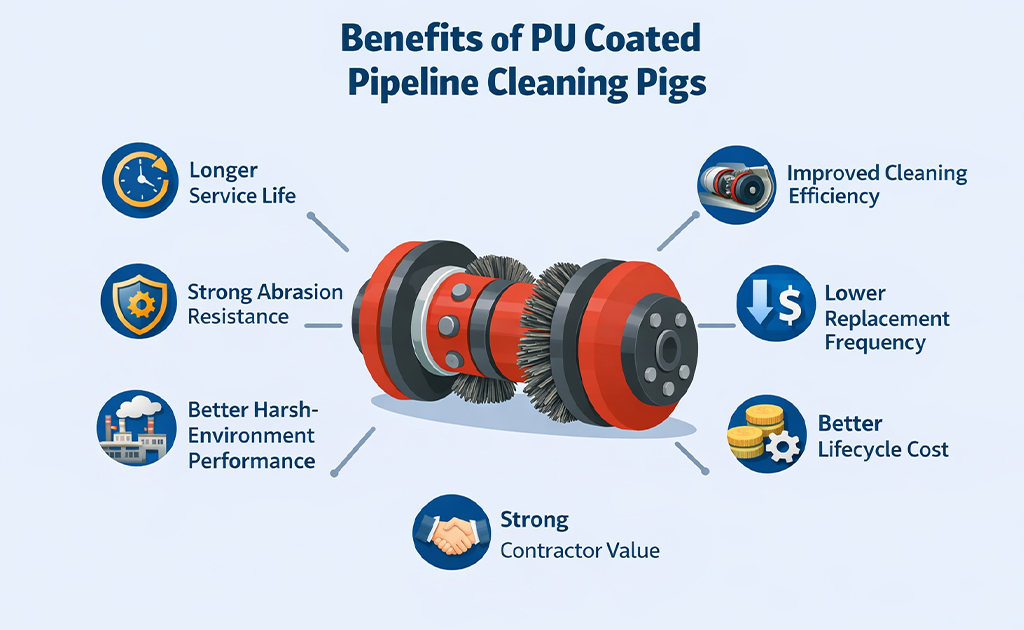
PU coated pigs are preferred because they combine foam flexibility with polyurethane durability.
Key benefits include:
- Longer service life
- Strong abrasion resistance
- Better harsh-environment performance
- Improved cleaning efficiency
- Lower replacement frequency
- Better lifecycle cost
- High durability for repeated runs
- Strong contractor value
For industrial users, polyurethane coated pigs often deliver the best balance of performance and cost.
Why Engineers and Buyers Choose These Solutions
Different stakeholders prioritize different benefits.
Engineers
Need:
- reliable cleaning
- predictable performance
- compatibility with pipeline geometry
Maintenance Teams
Need:
- reduced downtime
- easy deployment
- repeatable cleaning results
EPC Contractors
Need:
- project-ready supply
- consistent manufacturing
- bulk order support
Procurement Buyers
Need:
- durability
- price-performance value
- custom sizing options
This is why custom PU coated pig solutions are highly preferred in industrial projects.
Customization and Manufacturing Capability
For specialized applications, custom manufacturing is essential.
Customization options include:
- custom diameters
- foam density variation
- polyurethane coating thickness
- hardness selection
- abrasive surface options
- wire brush integration
- bidirectional cup design
- project bulk supply
Custom-engineered pipeline cleaning pigs applications ensure better fit, better cleaning, and longer service life.
FAQs
What are pipeline cleaning pigs used for?
They are used for cleaning, dewatering, drying, inspection preparation, and product separation.
Which pig is best for wax and sludge removal?
Brush pigs, wire brush pigs, and PU coated pigs are highly effective.
What is the difference between foam pigs and brush pigs?
Foam pigs are flexible for light cleaning, while brush pigs offer mechanical scrubbing.
Why are PU coated pigs used in pipeline cleaning?
They provide better durability, abrasion resistance, and longer life.
What are polyurethane coated pigs?
These are pigs with an outer polyurethane layer for tougher cleaning applications.
Can pipeline pigs be custom manufactured?
Yes, they can be manufactured in custom sizes, densities, and coatings.
Conclusion of Pipeline Cleaning Pigs
Pipeline cleaning pigs are essential pipeline cleaning tools for maintaining flow efficiency, product quality, and long-term pipeline integrity. From flexible foam pigs and mechanical brush pigs to highly durable PU coated pigs, each pig type serves a specific maintenance and cleaning function.
For demanding oil and gas and industrial applications, polyurethane coated pigs offer an excellent balance of flexibility, wear resistance, repeated usability, and superior cleaning performance.
Choosing the right pig type based on deposit condition, pipeline geometry, and cleaning objective helps engineers and maintenance teams achieve better reliability, lower downtime, and improved operational efficiency.For companies looking for custom-engineered, high-performance pipeline pigging solutions, Mecalsys stands out as a trusted manufacturer with strong polyurethane expertise, custom design capability, and reliable bulk supply support for oil & gas and industrial pipeline systems.